
Cutterheads
Carbide Insert Cutterhead For Industrial Planer
Carbide Insert Cutterhead For Industrial Planer
Quick Summary
This comprehensive guide delves into the world of carbide insert cutterheads for industrial planers, offering a detailed look at their benefits, components, and selection criteria. Unlike traditional HSS (High-Speed Steel) blades, carbide inserts offer superior durability, longevity, and versatility across a range of wood types. We'll explore the advantages of spiral/helical cutterheads that use indexable carbide inserts, and how they provide smoother cuts, reduced noise, and easier maintenance compared to straight-knife cutterheads. From understanding insert grades and geometries to evaluating cutterhead designs and maintenance considerations, this guide equips you with the knowledge to make informed decisions. Based on competitor research, replacement carbide inserts can be found for as low as $21.99 for a set of 10, but the cost of an entire cutterhead can be several hundred dollars. Whether you're upgrading an existing planer or specifying a new machine, this guide will help you optimize your woodworking processes with carbide insert technology.
Table of Contents
Introduction: Why Carbide Insert Cutterheads?
In the realm of industrial woodworking, achieving a flawless finish on planed surfaces is paramount. For years, traditional high-speed steel (HSS) blades have been the standard. However, the advent of carbide insert cutterheads has revolutionized the industry, offering a compelling alternative with significant advantages. These cutterheads, equipped with small, replaceable carbide inserts, deliver superior performance, longevity, and versatility, making them a worthwhile investment for businesses seeking to optimize their planing operations.
This guide aims to provide a comprehensive overview of carbide insert cutterheads for industrial planers. We will explore the key benefits, components, types, selection criteria, maintenance practices, and troubleshooting tips associated with these advanced cutting tools. By the end of this guide, you will be equipped with the knowledge necessary to make informed decisions about incorporating carbide insert cutterheads into your woodworking processes.
The Benefits of Carbide Insert Cutterheads
Carbide insert cutterheads offer a multitude of advantages over traditional HSS blades, contributing to improved efficiency, cost-effectiveness, and overall quality in industrial planing operations. Here are some of the most significant benefits:
1. Extended Lifespan and Durability
Carbide is significantly harder and more wear-resistant than HSS. This translates to a substantially longer lifespan for carbide inserts compared to traditional blades. While HSS blades require frequent sharpening or replacement, carbide inserts can maintain their sharpness for extended periods, reducing downtime and replacement costs. Some manufacturers claim double the lifetime compared to general carbide cutters. TJATSE claims their carbide inserts are made by K10 grade solid tungsten carbide, double life-time than general carbide cutters, and increased 30% hardness.
2. Superior Cut Quality
Carbide inserts are known for producing smoother, cleaner cuts with minimal tear-out, even on difficult or figured wood. The precise geometry and consistent sharpness of the inserts contribute to a superior surface finish, reducing the need for subsequent sanding or finishing operations. Helical cutterheads, in particular, excel at producing exceptionally smooth surfaces due to their shearing action.
3. Reduced Noise Levels
Planers, especially those with traditional straight-knife cutterheads, can generate significant noise. Carbide insert cutterheads, particularly helical designs, operate much more quietly due to the staggered arrangement of the inserts and their shearing action. This can create a more comfortable and safer working environment for operators.
4. Easy Maintenance and Insert Replacement
One of the most significant advantages of carbide insert cutterheads is the ease of maintenance. When an insert becomes dull or damaged, it can be quickly and easily replaced with a new one. This eliminates the need for time-consuming sharpening processes and reduces downtime. Many inserts are also indexable, meaning they have multiple cutting edges. If one edge becomes dull, you can simply rotate the insert to expose a fresh, sharp edge. TJATSE notes that each insert can be rotated up to three times to expose a new sharp edge, no more changing and resetting knives every time a blade gets dull.
5. Versatility Across Wood Types
Carbide inserts are capable of efficiently machining a wide range of wood types, from softwoods to hardwoods, and even abrasive materials like MDF and particleboard. Their exceptional hardness and wear resistance make them ideal for demanding industrial applications involving diverse wood species.
6. Cost Savings
While the initial investment in a carbide insert cutterhead may be higher than that of a traditional HSS cutterhead, the long-term cost savings can be substantial. The extended lifespan of the inserts, reduced downtime, improved cut quality, and lower noise levels all contribute to a more efficient and cost-effective planing operation.
Understanding the Key Components
A carbide insert cutterhead consists of several key components that work together to deliver its exceptional performance. Understanding these components is essential for proper selection, maintenance, and troubleshooting.
1. Cutterhead Body
The cutterhead body is the main structural component that houses the carbide inserts. It is typically made of high-strength steel or aluminum alloy and is precisely machined to ensure accurate insert placement and alignment. The design of the cutterhead body plays a crucial role in determining the cut quality, noise levels, and overall performance of the system.
2. Carbide Inserts
Carbide inserts are small, replaceable cutting tools made of tungsten carbide or other hard materials. They are available in various shapes, sizes, and grades to suit different wood types and cutting applications. The geometry of the insert, including its cutting angle, relief angle, and edge preparation, significantly affects the cut quality and tool life.
3. Insert Screws
Insert screws are used to securely fasten the carbide inserts to the cutterhead body. These screws are typically made of high-strength steel and are designed to withstand the high cutting forces generated during planing. Proper torqueing of the insert screws is essential to prevent insert movement and ensure accurate cutting performance.
4. Wedges (Optional)
Some carbide insert cutterheads utilize wedges to provide additional support and stability to the inserts. Wedges are typically made of hardened steel and are precisely machined to match the shape of the insert. They help to distribute the cutting forces evenly across the insert, reducing the risk of breakage or chipping.
5. Chipbreakers (Optional)
Chipbreakers are small projections on the cutterhead body that help to break up the wood chips as they are being cut. This prevents the chips from becoming too large or unwieldy, which can improve dust collection and reduce the risk of chip-out.
Types of Carbide Insert Cutterheads
Carbide insert cutterheads are available in several different designs, each with its own unique characteristics and advantages. The two primary types are:
1. Straight-Knife Cutterheads with Carbide Inserts
These cutterheads resemble traditional straight-knife cutterheads, but instead of solid HSS blades, they feature multiple rows of small, rectangular carbide inserts. The inserts are typically arranged in a staggered pattern to reduce the cutting load and improve the surface finish. While offering some improvements over traditional HSS blades, straight-knife cutterheads with carbide inserts do not provide the same level of performance as helical cutterheads.
2. Spiral/Helical Cutterheads
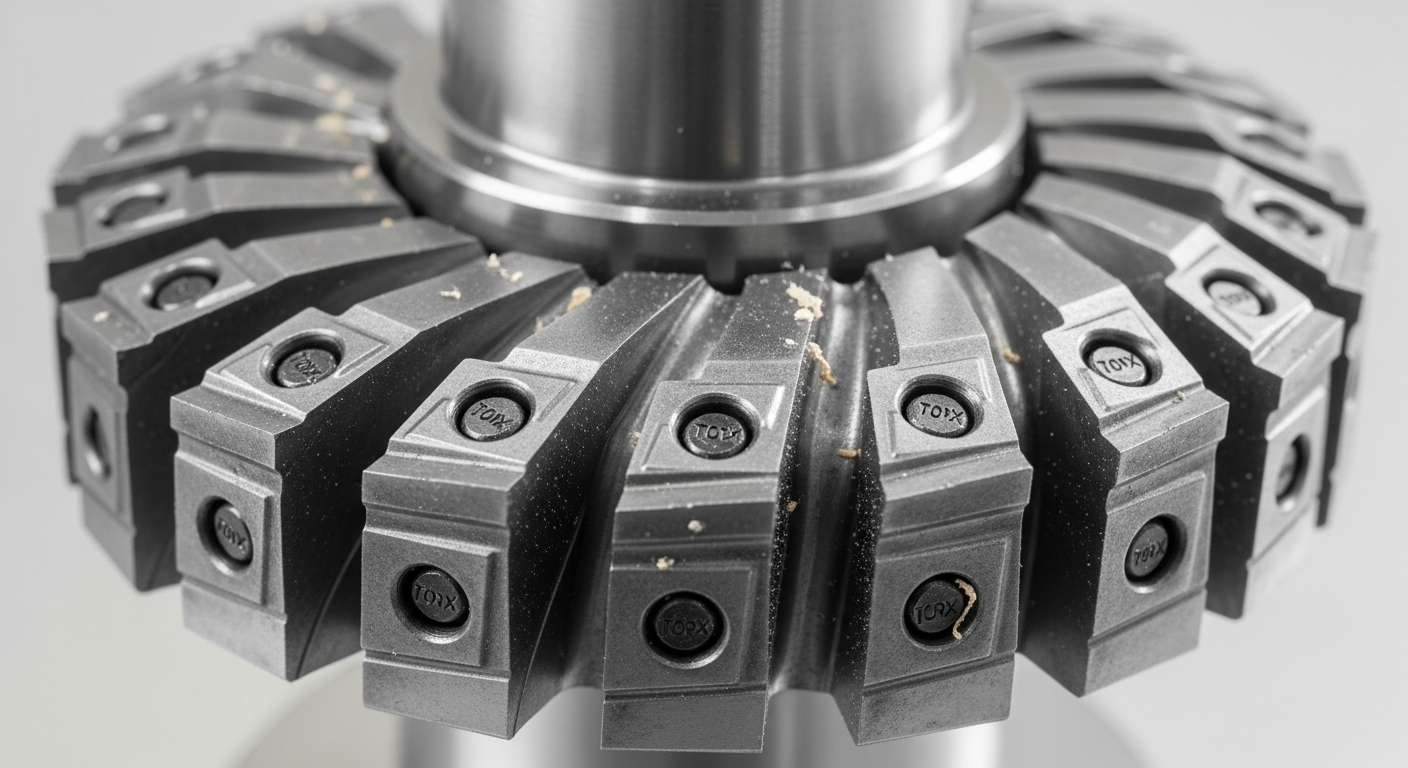
Spiral or helical cutterheads are the most advanced type of carbide insert cutterhead. They feature a series of individual carbide inserts arranged in a spiral or helical pattern around the cutterhead body. This design provides a true shearing cut, which significantly reduces tear-out, noise levels, and cutting forces. Helical cutterheads are the preferred choice for industrial applications requiring the highest levels of cut quality and efficiency.
According to TJATSE, their carbide inserts are designed for use in most popular woodworking jointer and planer spiral/helical cutter head or full-size wood lathe turning rougher.
Within the helical cutterhead category, there are variations in the helix angle, insert density, and insert shape. Some cutterheads utilize a more aggressive helix angle for faster material removal, while others prioritize a smoother surface finish with a shallower helix angle. The choice of cutterhead design depends on the specific application and the desired balance between speed and quality.
Selecting the Right Cutterhead: Key Considerations
Choosing the right carbide insert cutterhead for your industrial planer is a critical decision that can significantly impact your productivity, quality, and profitability. Here are some key factors to consider during the selection process:
1. Machine Compatibility
Ensure that the cutterhead you select is compatible with your specific planer model. Check the cutterhead diameter, arbor size, and mounting configuration to ensure a proper fit. Some manufacturers offer universal cutterheads that can be adapted to fit a wide range of machines, while others require a custom-made cutterhead.
2. Cutterhead Diameter and Cutting Width
The cutterhead diameter and cutting width determine the maximum material removal rate and the width of the planed surface. Select a cutterhead with sufficient diameter and cutting width to meet your production requirements.
3. Insert Grade and Geometry
The grade and geometry of the carbide inserts are critical factors in determining the cut quality and tool life. Select an insert grade that is appropriate for the wood types you will be machining. For example, harder grades of carbide are better suited for abrasive materials like MDF and particleboard, while softer grades are more suitable for hardwoods. The insert geometry, including the cutting angle, relief angle, and edge preparation, should also be chosen based on the specific application. According to TJATSE, their inserts are made by K10 carbide, known for high strength and hardness.
4. Insert Density
Insert density refers to the number of inserts per inch of cutting width. A higher insert density generally results in a smoother surface finish and reduced tear-out. However, it can also increase the cutting forces and noise levels. Select an insert density that provides the desired balance between cut quality and performance.
5. Cutterhead Balance
A well-balanced cutterhead is essential for smooth, vibration-free operation. An unbalanced cutterhead can cause excessive noise, vibration, and premature wear on the machine bearings. Choose a cutterhead from a reputable manufacturer that utilizes precision balancing techniques.
6. Dust Collection
Efficient dust collection is crucial for maintaining a clean and safe working environment. Select a cutterhead with a design that promotes effective chip evacuation and minimizes dust generation. Consider the size and location of the dust collection ports to ensure compatibility with your existing dust collection system.
7. Price and Availability of Replacement Inserts
Before purchasing a carbide insert cutterhead, research the price and availability of replacement inserts. Ensure that the inserts are readily available from multiple suppliers and that the price is competitive. Some manufacturers offer proprietary inserts that are only available from them, which can limit your options and potentially increase your costs. Asieg Tool and TJATSE both sell replacement inserts on Amazon.
8. Manufacturer Reputation and Warranty
Choose a cutterhead from a reputable manufacturer with a proven track record of quality and reliability. Check the manufacturer's warranty policy to ensure that you are protected against defects in materials and workmanship.
| Consideration | Description | Actionable Advice |
|---|---|---|
| Machine Compatibility | Ensuring the cutterhead fits your planer. | Verify cutterhead diameter, arbor size, and mounting configuration. |
| Cutterhead Diameter & Width | Determining material removal rate and planing width. | Select appropriate diameter and width for production needs. |
| Insert Grade & Geometry | Impacting cut quality and tool life. | Choose grade suitable for wood types; consider cutting angle. |
| Insert Density | Balancing surface finish with cutting force and noise. | Optimize density for desired smoothness and performance. |
| Cutterhead Balance | Ensuring smooth, vibration-free operation. | Select a cutterhead from a manufacturer utilizing precision balancing. |
| Dust Collection | Maintaining a clean and safe environment. | Choose a design promoting effective chip evacuation. |
| Insert Cost & Availability | Affecting long-term operational costs. | Research replacement insert prices and supplier availability. |
| Manufacturer Reputation | Assuring quality and reliability. | Select a manufacturer with a proven track record and warranty. |
Maintenance and Insert Replacement
Proper maintenance is essential for maximizing the lifespan and performance of your carbide insert cutterhead. Here are some key maintenance practices to follow:
1. Regular Cleaning
Keep the cutterhead clean and free of dust, resin, and other debris. Use a soft brush or compressed air to remove accumulated material. Avoid using harsh solvents or abrasive cleaners, as they can damage the cutterhead body and inserts.
2. Insert Inspection
Regularly inspect the carbide inserts for signs of wear, chipping, or damage. Replace any inserts that are dull or damaged to maintain optimal cut quality and prevent damage to the cutterhead body. It is better to replace inserts proactively rather than waiting for a catastrophic failure.
3. Insert Replacement
When replacing carbide inserts, use the correct type and size of insert screws. Ensure that the screws are properly torqued to prevent insert movement. Follow the manufacturer's recommendations for torque values. Over-torquing can damage the screws or the cutterhead body, while under-torquing can allow the inserts to move during operation.
4. Cutterhead Balancing
If you notice excessive vibration or noise, have the cutterhead professionally balanced. An unbalanced cutterhead can cause premature wear on the machine bearings and reduce the cut quality. Balancing is especially important after replacing a significant number of inserts.
5. Lubrication
Lubricate the cutterhead bearings regularly according to the manufacturer's recommendations. Proper lubrication helps to reduce friction and prevent premature wear. Use a high-quality grease that is specifically designed for woodworking machinery.
6. Storage
When not in use, store the cutterhead in a clean, dry place to prevent corrosion and damage. Consider using a protective case or cover to shield the cutterhead from dust and moisture.
Common Issues and Troubleshooting
Even with proper maintenance, you may encounter occasional issues with your carbide insert cutterhead. Here are some common problems and their potential solutions:
1. Tear-out
Tear-out occurs when the wood fibers are pulled out of the surface during planing, resulting in a rough or uneven finish. Possible causes of tear-out include dull inserts, incorrect cutting angle, excessive feed rate, or working with highly figured wood. To address tear-out, try the following:
- Replace dull inserts with sharp ones.
- Adjust the cutting angle to a shallower setting.
- Reduce the feed rate.
- Use a backer board to support the wood fibers.
2. Snipe
Snipe is a depression at the beginning or end of a board caused by the planer rollers lifting the board slightly as it enters or exits the machine. To minimize snipe, try the following:
- Support the board as it enters and exits the planer.
- Reduce the depth of cut.
- Ensure that the infeed and outfeed tables are properly aligned.
3. Ridges
Ridges are parallel lines on the planed surface caused by uneven insert height or a damaged cutterhead body. To correct ridges, try the following:
- Carefully inspect the inserts to ensure that they are all at the same height.
- Check the cutterhead body for damage or distortion.
- Have the cutterhead professionally inspected and repaired if necessary.
4. Excessive Noise or Vibration
Excessive noise or vibration can be caused by an unbalanced cutterhead, loose inserts, or damaged bearings. To address these issues, try the following:
- Check the insert screws to ensure that they are properly torqued.
- Have the cutterhead professionally balanced.
- Inspect and replace the bearings if necessary.
5. Insert Breakage
Insert breakage can be caused by excessive cutting forces, hard knots in the wood, or improper insert grade. To prevent insert breakage, try the following:
- Reduce the depth of cut.
- Avoid planing wood with large or hard knots.
- Use a harder grade of carbide insert.
Frequently Asked Questions
What is the typical lifespan of carbide inserts compared to HSS blades?
Carbide inserts typically last significantly longer than HSS blades, often by a factor of 5 to 10 or more. This is due to the superior hardness and wear resistance of carbide. TJATSE claims their carbide inserts are made by K10 grade solid tungsten carbide, double life-time than general carbide cutters, and increased 30% hardness. Individual results vary depending on the wood being cut and the depth of cut.
Are carbide insert cutterheads suitable for all types of wood?
Yes, carbide insert cutterheads are versatile and can be used with a wide range of wood types, including softwoods, hardwoods, and even abrasive materials like MDF and particleboard. The key is to select the appropriate insert grade and geometry for the specific wood being machined.
How often should I replace the carbide inserts?
The replacement frequency depends on the type of wood being cut, the depth of cut, and the quality of the inserts. Regularly inspect the inserts for signs of wear or damage. Replace them when they become dull or chipped to maintain optimal cut quality. Indexable inserts can be rotated to a fresh edge, extending their use.
Can I sharpen carbide inserts?
While it is technically possible to sharpen carbide inserts, it is generally not recommended. Sharpening carbide requires specialized equipment and expertise, and it can be difficult to maintain the correct geometry. It is typically more cost-effective to simply replace the inserts when they become dull.
Are helical cutterheads worth the extra cost?
For industrial applications requiring the highest levels of cut quality and efficiency, helical cutterheads are definitely worth the extra cost. They provide superior surface finishes, reduced noise levels, and easier maintenance compared to straight-knife cutterheads. However, for hobbyist or light-duty applications, a straight-knife cutterhead with carbide inserts may be sufficient.
What safety precautions should I take when working with carbide insert cutterheads?
Always wear appropriate personal protective equipment (PPE), including safety glasses, hearing protection, and a dust mask. Ensure that the planer is properly grounded and that all safety guards are in place. Never attempt to adjust or repair the cutterhead while the machine is running. Follow the manufacturer's instructions for safe operation and maintenance.