
Router Bits
How To Extend The Life Of Carbide Router Bits
How To Extend The Life Of Carbide Router Bits
Quick Summary
Carbide router bits are a significant investment for any woodworker or CNC professional. This guide provides a comprehensive overview of how to maximize their lifespan, saving you money and ensuring consistent performance. Key strategies include selecting the right bit for the material, optimizing cutting parameters (speed, feed rate, depth of cut), implementing proper cooling and lubrication, and maintaining your equipment. Regular cleaning, inspection, and timely sharpening are also crucial. While high-quality bits like Amana Tool® come at a premium, as mentioned by Toolstoday, their durability and precision can justify the cost in the long run by reducing the frequency of replacements and downtime. Learn to identify wear patterns, monitor bit performance, and develop a replacement strategy to keep your router bits cutting efficiently for years to come.
Table of Contents
Introduction: Why Extend Router Bit Life?
Carbide router bits are essential tools for woodworking, CNC machining, and various other applications requiring precision cutting. They offer superior hardness and durability compared to high-speed steel (HSS) bits, allowing them to cut through a wider range of materials, including hardwoods, composites, and even some non-ferrous metals. However, even the best carbide bits eventually wear down, impacting cut quality and requiring replacement. Extending the life of your carbide router bits is crucial for several reasons:
- Cost Savings: Router bits, especially high-quality carbide ones, represent a significant investment. Frequent replacements can quickly add up. Extending their lifespan directly reduces tooling costs.
- Consistent Performance: A sharp router bit produces clean, accurate cuts. As bits dull, the quality of the cut degrades, leading to rough edges, tear-out, and inconsistent dimensions. Maintaining sharp bits ensures consistent results.
- Reduced Downtime: Changing router bits takes time, disrupting workflow and reducing productivity. Extending bit life means fewer interruptions and more time spent cutting.
- Improved Safety: Dull bits require more force to cut, increasing the risk of kickback and other accidents. Sharp bits cut more efficiently and safely.
This guide provides practical strategies and techniques to maximize the lifespan of your carbide router bits, helping you save money, improve cut quality, and enhance overall efficiency in your woodworking or machining operations. We'll cover everything from selecting the right bit for the job to proper maintenance and sharpening techniques.
Choosing the Right Carbide Router Bit
The foundation of extending router bit life lies in selecting the appropriate bit for the specific task and material. Using the wrong bit can lead to premature wear, breakage, and poor cut quality. Here's a breakdown of key considerations:
1. Carbide Grade and Quality
Not all carbide is created equal. Different grades of carbide offer varying levels of hardness, wear resistance, and toughness. Finer micro-grain carbide, like that used in Amana Tool® bits (as mentioned by Toolstoday Toolstoday), is generally more durable and holds an edge longer than coarser grades. While these bits may be more expensive upfront, their extended lifespan and superior performance can justify the investment.
When evaluating carbide quality, consider the following:
- Micro-grain vs. Sub-micron Grain: Sub-micron grain carbide is even finer than micro-grain, offering exceptional edge retention and wear resistance.
- Carbide Thickness: Thicker carbide tips can be re-sharpened more times, extending the overall life of the bit.
2. Bit Geometry and Design
The geometry of the router bit, including the number of flutes, cutting angle, and spiral direction, significantly impacts its performance and lifespan. Consider the following:
- Number of Flutes:
- Single-Flute: Best for fast material removal but can produce a rougher finish.
- Two-Flute: A good balance of speed and finish. According to Toolstoday Toolstoday, two-flute bits are preferable when a fine finish is paramount, as they eliminate vibration that degrades the cut finish.
- Three or More Flutes: Ideal for achieving a smooth finish at slower feed rates.
- Spiral Direction:
- Upcut: Pulls chips upward, providing good chip clearance but can cause tear-out on the top surface.
- Downcut: Pushes chips downward, producing a clean top surface but can lead to chip build-up in the cut.
- Compression: Combines upcut and downcut flutes, providing a clean cut on both surfaces.
- Cutting Angle: A steeper cutting angle is more aggressive but can also lead to increased wear.
3. Material Compatibility
Different materials require different bit designs and carbide grades. For example:
- Hardwoods: Require high-quality carbide and a bit design that minimizes tear-out.
- Softwoods: Can be cut with less expensive carbide, but resin build-up can be a problem.
- Plastics: Require specialized bits with geometries that prevent melting and chipping.
- Aluminum: Need bits designed for non-ferrous metals, with geometries that prevent chip welding.
AccTek CNC AccTek CNC notes that softer materials generally extend tool life, while harder materials cause more rapid wear.
4. Shank Size
Choose a shank size that is appropriate for your router and collet. Larger shank sizes (e.g., 1/2 inch) provide greater stability and reduce vibration, which can extend bit life.
5. Coating
Coatings, such as titanium nitride (TiN) or diamond-like carbon (DLC), can improve the hardness, wear resistance, and lubricity of carbide router bits. These coatings can extend bit life, especially when cutting abrasive materials.
Optimal Cutting Parameters for Longevity
Even the best router bit will wear prematurely if used improperly. Optimizing cutting parameters, such as speed, feed rate, and depth of cut, is essential for maximizing bit life and achieving optimal cut quality.
1. Spindle Speed (RPM)
The correct spindle speed depends on the bit diameter, material being cut, and desired finish. Too high a speed can generate excessive heat, leading to premature wear and burning. Too low a speed can cause the bit to "chatter" or "grab," resulting in a rough cut and increased stress on the bit. AccTek CNC AccTek CNC notes that excessive cutting speed can lead to heat buildup and accelerated wear.
A general guideline is to use higher speeds for smaller diameter bits and lower speeds for larger diameter bits. Consult a speed chart or use a speed calculator to determine the optimal RPM for your specific application.
2. Feed Rate
The feed rate is the speed at which the router bit moves through the material. Too high a feed rate can overload the bit, causing it to dull quickly or even break. Too low a feed rate can cause the bit to rub against the material, generating heat and work hardening the surface. AccTek CNC AccTek CNC also points out that high feed rates generate more heat and vibration. The ideal feed rate depends on the material, bit geometry, and spindle speed.
A good starting point is to use a feed rate that produces small, consistent chips. If the chips are powdery or burnt, the feed rate is too slow. If the chips are large and splintered, the feed rate is too fast.
3. Depth of Cut
The depth of cut is the amount of material removed in a single pass. Deeper cuts put more stress on the bit, leading to increased wear and heat build-up. It's generally better to take multiple shallow passes than one deep pass, especially when cutting hard materials. Toolstoday Toolstoday recommends multiple passes for deeper cuts to reduce stress on the bit, and AccTek CNC AccTek CNC agrees that excessive depth of cut can overload the bit.
For hard materials, limit the depth of cut to no more than half the bit diameter per pass. For softer materials, you can increase the depth of cut, but be careful not to overload the bit.
4. Climb vs. Conventional Cutting
In climb cutting, the bit cuts into the material in the same direction as the feed. This can produce a cleaner cut with less tear-out, but it also increases the risk of the bit "grabbing" and pulling itself through the material. In conventional cutting, the bit cuts against the feed direction. This provides more control but can produce a rougher cut. Experiment with both methods to see which works best for your specific application.
Cooling and Lubrication Strategies
Heat is a major enemy of carbide router bits. It can cause the carbide to soften, leading to rapid wear and reduced cutting performance. Proper cooling and lubrication are essential for dissipating heat and extending bit life.
1. Air Cooling
Air cooling is the simplest and most common method of cooling router bits. A stream of compressed air is directed at the bit to remove heat and clear chips from the cutting area. Air cooling is effective for light-duty applications, such as cutting wood and plastics.
2. Liquid Cooling
Liquid cooling is more effective than air cooling for heavy-duty applications, such as cutting metals and composites. A coolant is pumped through a nozzle and directed at the bit, providing superior cooling and lubrication. Coolants can be water-based or oil-based, depending on the material being cut.
3. Mist Cooling
Mist cooling is a compromise between air and liquid cooling. A fine mist of coolant is sprayed onto the bit, providing some of the benefits of liquid cooling without the mess. Mist cooling is often used for cutting aluminum and other non-ferrous metals. AccTek CNC AccTek CNC specifically mentions mist cooling as an effective cooling system.
4. Lubrication
Lubrication reduces friction between the bit and the material, further reducing heat build-up and extending bit life. Lubricants can be applied manually or through an automated system. Common lubricants include cutting oils, waxes, and dry lubricants.
When choosing a lubricant, consider the following:
- Material Compatibility: The lubricant should be compatible with the material being cut.
- Viscosity: The lubricant should have the appropriate viscosity for the application.
- Flash Point: The lubricant should have a high flash point to prevent fire hazards.
Maintenance and Cleaning Best Practices
Regular maintenance and cleaning are crucial for keeping your carbide router bits in top condition and extending their lifespan. Build-up of resin, pitch, and other debris can reduce cutting efficiency, increase heat build-up, and accelerate wear.
1. Cleaning
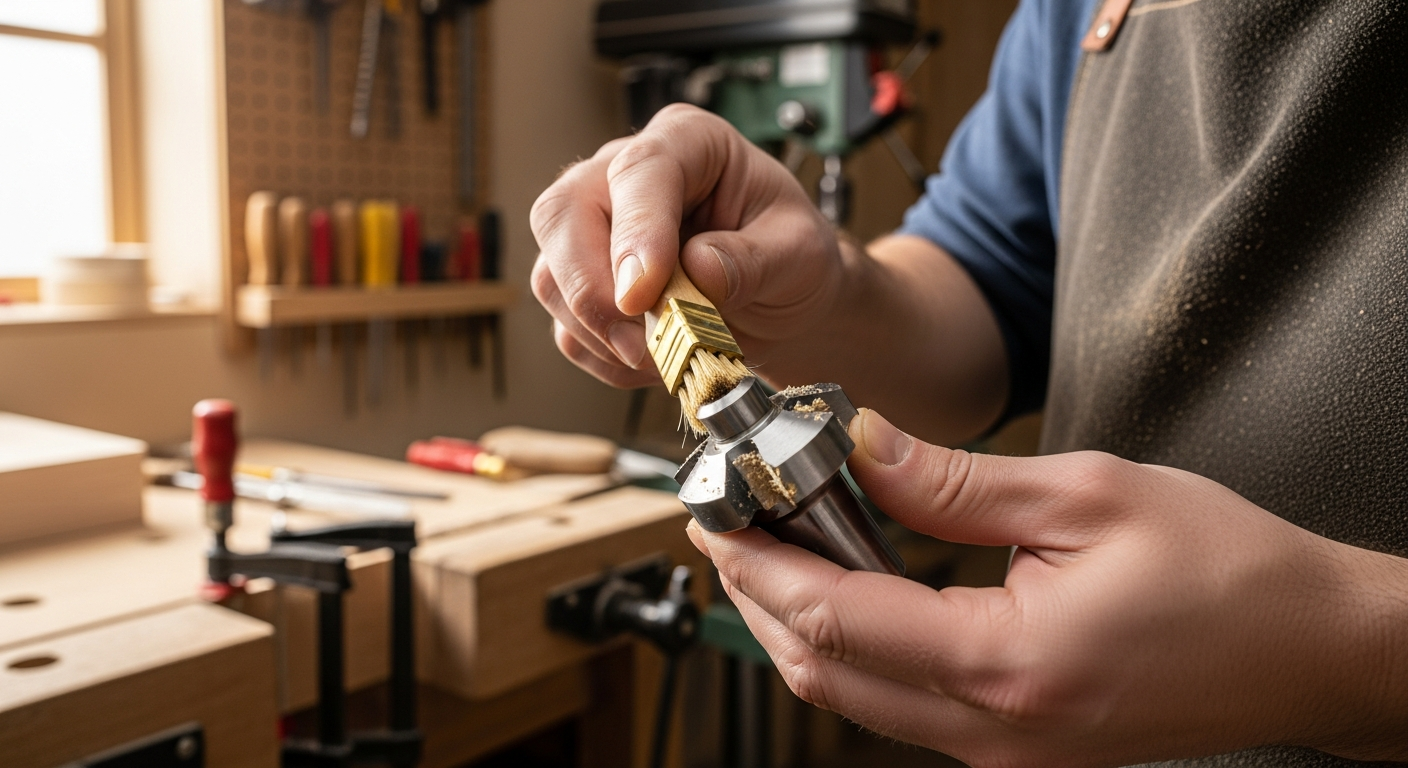
Clean your router bits after each use to remove any build-up of debris. Use a soft brush and a specialized router bit cleaner to remove resin, pitch, and other contaminants. Avoid using harsh chemicals or abrasive cleaners, as these can damage the carbide and coatings. As mentioned by one user on Router Forums Router Forums, cleaning bits when they get "crap all over them" is essential.
For stubborn build-up, soak the bit in a router bit cleaner for several hours before scrubbing. Be sure to dry the bit thoroughly after cleaning to prevent rust.
2. Inspection
Inspect your router bits regularly for signs of wear, damage, or corrosion. Look for:
- Chipped or Broken Cutting Edges: These can indicate excessive wear or impact damage.
- Dull Cutting Edges: A dull edge will appear rounded or polished instead of sharp.
- Corrosion: Rust or other corrosion can weaken the carbide and reduce its cutting performance.
- Bent or Damaged Shanks: A bent shank can cause vibration and inaccurate cuts.
Replace any bits that are damaged or excessively worn.
3. Storage
Store your router bits in a clean, dry place to prevent corrosion and damage. Use a router bit storage case or rack to protect the cutting edges and prevent them from bumping against each other. Avoid storing bits in direct sunlight or extreme temperatures.
4. Collet Maintenance
The collet is the part of the router that holds the bit in place. A worn or damaged collet can cause vibration, inaccurate cuts, and premature bit wear. Inspect your collets regularly for signs of wear or damage, such as cracks, corrosion, or distortion. Clean your collets regularly with a brush and solvent to remove any debris. Replace your collets periodically, as recommended by the manufacturer.
Toolstoday Toolstoday highlights the importance of proper collet maintenance, noting that collet slippage can lead to inaccurate cuts or damage to the workpiece. They recommend regularly inspecting and replacing worn collets.
Monitoring Router Bit Wear
Regularly monitoring router bit wear is essential for maintaining cut quality and preventing catastrophic failures. By tracking the condition of your bits, you can identify signs of wear early and take corrective action before they become a major problem. AccTek CNC AccTek CNC emphasizes that regular inspection and measurement ensure early detection of wear.
1. Visual Inspection
Visual inspection is the simplest and most common method of monitoring router bit wear. Examine the cutting edges of the bit under a magnifying glass or microscope. Look for:
- Chipping or Micro-Chipping: Small chips along the cutting edge are a sign of wear.
- Rounding of the Cutting Edge: A sharp cutting edge will have a distinct angle. As the bit wears, this angle will become rounded.
- Polishing of the Flank: The flank is the surface behind the cutting edge. As the bit wears, the flank will become polished from rubbing against the material.
- Discoloration: Heat can cause the carbide to discolor, indicating that the bit is overheating.
2. Cut Quality
The quality of the cut is a good indicator of router bit wear. Look for:
- Rough Edges: A dull bit will produce rough or splintered edges.
- Tear-Out: Tear-out occurs when the wood fibers are pulled out of the material instead of being cleanly cut.
- Burning: Burning indicates that the bit is overheating and rubbing against the material.
- Inaccurate Dimensions: A dull bit may not cut to the correct dimensions.
3. Performance Monitoring
Track the performance of your router bits over time. Note the date the bit was put into service, the materials it was used to cut, and any problems encountered. This information can help you predict when the bit will need to be sharpened or replaced.
4. Measurement Tools
For more precise wear monitoring, use measurement tools such as:
- Micrometers: To measure the diameter of the bit and detect any reduction in size due to wear.
- Optical Comparators: To examine the cutting edges under magnification and measure the amount of wear.
AccTek CNC AccTek CNC recommends using micrometers and calipers for regular measurement of the tool's geometry to detect wear progression.
| Wear Sign | Possible Cause | Corrective Action |
|---|---|---|
| Chipped Cutting Edge | Impact, Hard Material, Excessive Feed Rate | Replace Bit, Reduce Feed Rate |
| Rounded Cutting Edge | Normal Wear, Excessive Heat | Sharpen or Replace Bit, Improve Cooling |
| Rough Cut Edges | Dull Bit, Incorrect Speed/Feed | Sharpen or Replace Bit, Adjust Speed/Feed |
| Burning | Excessive Heat, Slow Feed Rate | Increase Feed Rate, Improve Cooling |
| Vibration | Loose Collet, Bent Shank, Unbalanced Bit | Tighten Collet, Replace Bit, Check Balance |
Frequently Asked Questions
How often should I clean my router bits?
Clean your router bits after each use to prevent build-up of resin, pitch, and other debris. This will help maintain their cutting efficiency and extend their lifespan.
What's the best way to store router bits?
Store your router bits in a clean, dry place to prevent corrosion and damage. Use a router bit storage case or rack to protect the cutting edges and prevent them from bumping against each other.
Can all carbide router bits be sharpened?
Most carbide router bits can be sharpened, but it's important to use the correct sharpening techniques and equipment to avoid damaging the bit. Extremely worn or damaged bits may not be suitable for sharpening.
What are the signs that a router bit needs to be replaced?
Signs that a router bit needs to be replaced include excessive chipping or cracking, a significant reduction in diameter, and a bent or damaged shank.
Is it better to use climb cutting or conventional cutting?
The best method depends on the specific application. Climb cutting can produce a cleaner cut with less tear-out, but it also increases the risk of the bit "grabbing". Conventional cutting provides more control but can produce a rougher cut. Experiment with both methods to see which works best.
What is the ideal spindle speed for my router bit?
The ideal spindle speed depends on the bit diameter, material being cut, and desired finish. Consult a speed chart or use a speed calculator to determine the optimal RPM for your specific application.
What type of cooling is best for router bits?
The best type of cooling depends on the application. Air cooling is suitable for light-duty tasks, while liquid or mist cooling is more effective for heavy-duty applications and cutting harder materials.